
 Resilient Choice • resilientchoice.com
for Kids at Home
A simple, flexible summer routine for kids that helps create calmer days, less screen time, more reading, and easier planning — without turning summer into school.
Pack
A summer plan for kids at home does not need to be strict
The first few days of summer break can feel exciting. There is no school rush, no lunchbox pressure, and no homework folder to check. Then, after a few relaxed mornings, the same question starts showing up again and again: “What can I do?”
That is usually when screen time slowly becomes the easy answer. Not because parents are lazy, but because planning a full day of kids summer activities at home can feel like another job.
A good summer plan for kids at home is not a strict hour-by-hour schedule. It is a simple rhythm your child can understand. It gives the day enough structure to reduce chaos, while still leaving room for slow mornings, outdoor play, books, snacks, messes, and real summer fun.
Why a simple summer routine helps kids
Children often enjoy freedom, but they also feel safer when they know what comes next. A flexible summer routine for kids helps parents avoid constant decision-making while giving children a clear flow for the day.
It helps parents reduce daily decision fatigue
Without a plan, every morning starts from zero. Breakfast is over, the kids are restless, and you are suddenly expected to create a fresh list of activities. A simple summer schedule for kids removes some of that pressure.
- Kids know when reading, outdoor play, and quiet time usually happen.
- Parents stop answering “what now?” all day long.
- The day feels calmer without needing a perfect timetable.
It gives kids structure without removing fun
The goal is not to control every minute. The goal is to create a predictable rhythm. Kids can still build forts, ride bikes, draw pictures, read books, and enjoy summer — but the day has gentle anchors.
- Morning routines build independence.
- Reading time protects a helpful habit.
- Screen-free activities reduce automatic tablet time.
The simple 5-part summer routine
This is the core routine framework for the article and the free printable pack: Morning Routine → Reading Time → Outdoor Play → Screen-Free Fun → Wind Down.
Morning Routine
Wake up, breakfast, brush teeth, get dressed, and complete one small helpful task.
Reading Time
Use 15–20 minutes for books, library reading, read-aloud time, or audiobooks.
Outdoor Play
Bike ride, walk, backyard play, bubbles, water play, or a simple park visit.
Screen-Free Fun
Drawing, puzzles, pretend play, building, crafts, helping, or quiet creative time.
Wind Down
Dinner, bath, story time, tidy-up, gratitude moment, and bedtime rhythm.
Sample summer day schedule for kids
This example is only a starting point. Your family might wake up later, eat lunch earlier, or move outdoor play to the evening if the afternoon is too hot. The order matters more than the exact time.
- 8:00 AMWake up, breakfast, brush teeth, get dressed
- 9:00 AMSmall chore or helping task
- 9:30 AMReading time or read-aloud time
- 10:15 AMOutdoor play, bike ride, walk, or backyard activity
- 12:00 PMLunch and reset
- 1:00 PMQuiet time or screen-free activity
- 3:00 PMSnack, craft, game, water play, or flexible family activity
- 6:30 PMDinner, tidy-up, story, bath, and wind down
Why this summer plan for kids at home works better than a strict schedule
A simple summer plan for kids at home works best when it gives children a predictable rhythm without filling every hour. Parents do not need a perfect color-coded timetable. Most families just need a few repeatable anchors: morning routine, reading time, outdoor play, screen-free fun, and wind down.
This is also why the free printable pack is built around visual routine support instead of a strict schedule. The goal is to help kids understand what comes next, reduce screen-time battles, and make daily summer planning easier for parents.
For screen-time planning, the American Academy of Pediatrics offers a helpful family media plan resource for parents. For reading support, Reading Rockets shares practical summer reading tips parents can use at home.
Helpful parent resource
Use this if you want a more intentional approach to screen time, screen-free zones, and family media habits: AAP Family Media Plan.
Helpful reading resource
Use this if you want simple ideas to keep reading active during summer: Reading Rockets summer reading tips.
Together, these ideas support the same simple approach: create a flexible summer plan for kids at home, keep reading visible, prepare screen-free activities, and use a printable routine chart when kids need help knowing what to do next.
What this summer plan is
- A flexible routine framework for home days.
- A simple way to reduce screen-time battles.
- A visual plan kids can follow more independently.
- A helpful rhythm for reading, play, chores, and calm evenings.
What this summer plan is not
- It is not a strict minute-by-minute schedule.
- It is not another school day at home.
- It is not meant to fill every moment with activities.
- It is not a plan parents must follow perfectly.
Screen-free summer activities for kids at home
One of the easiest ways to make summer feel calmer is to prepare a short list of screen-free summer activities for kids before the boredom starts. You do not need expensive supplies. Most of these can be done with things already at home.
What’s inside the free summer printable pack?
The free Summer Schedule for Kids Starter Pack includes five printable pages that support the routine above. Use one page or the full pack depending on your child’s age and your family’s schedule.
Pages that help with daily structure
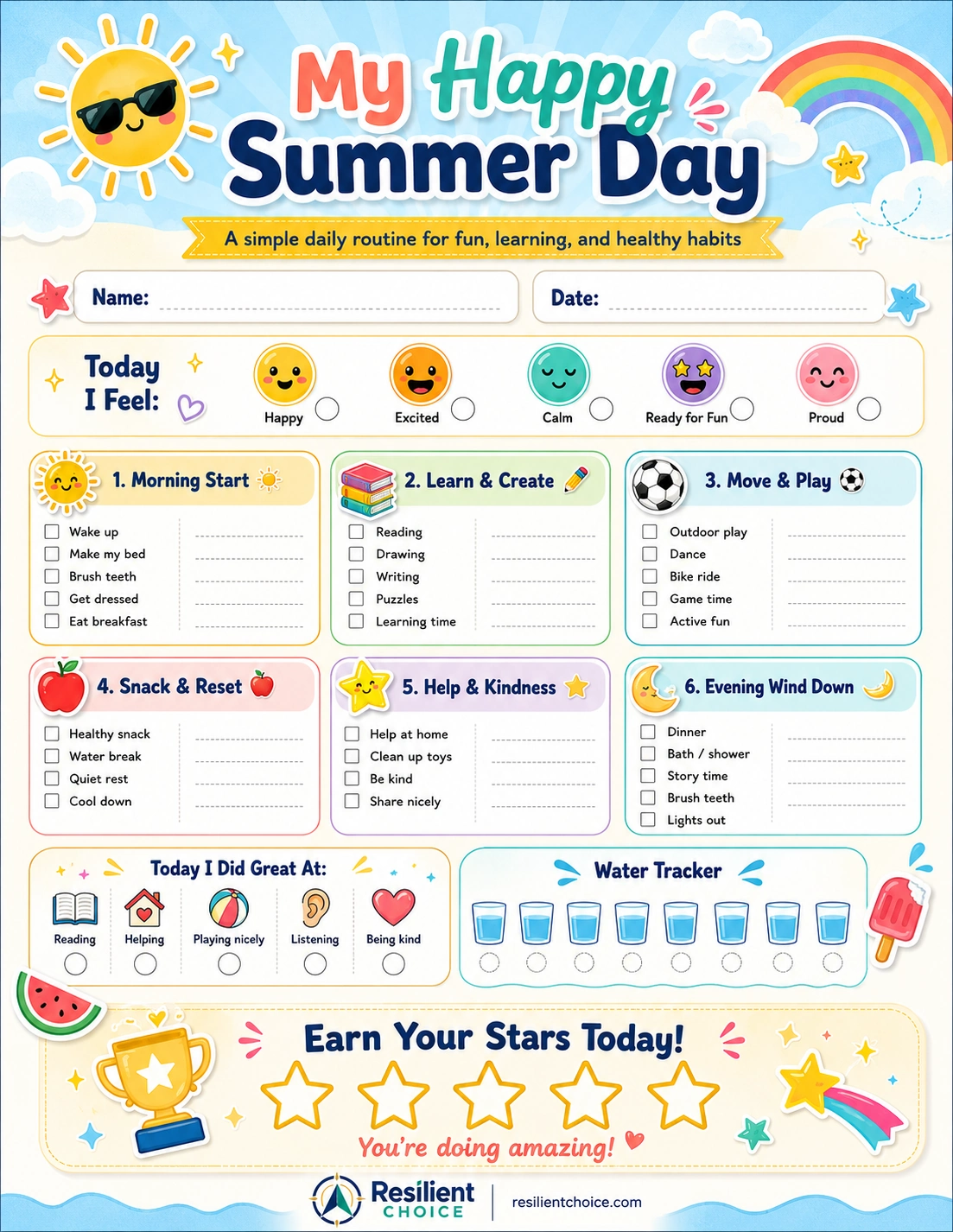
- My Happy Summer Day: daily routine chart for kids with simple visual sections.
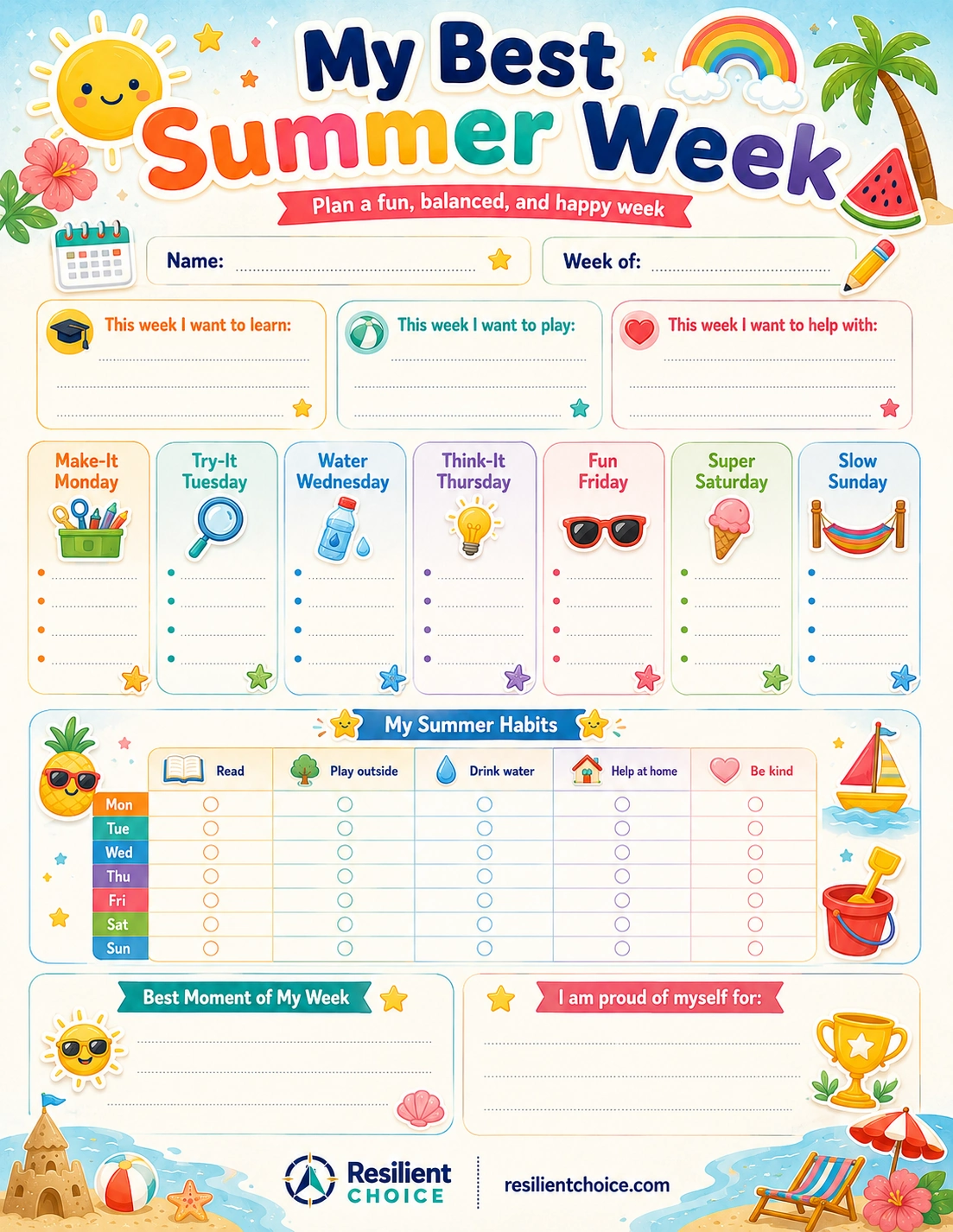
- My Best Summer Week: weekly summer planner for kids to map activities and habits.
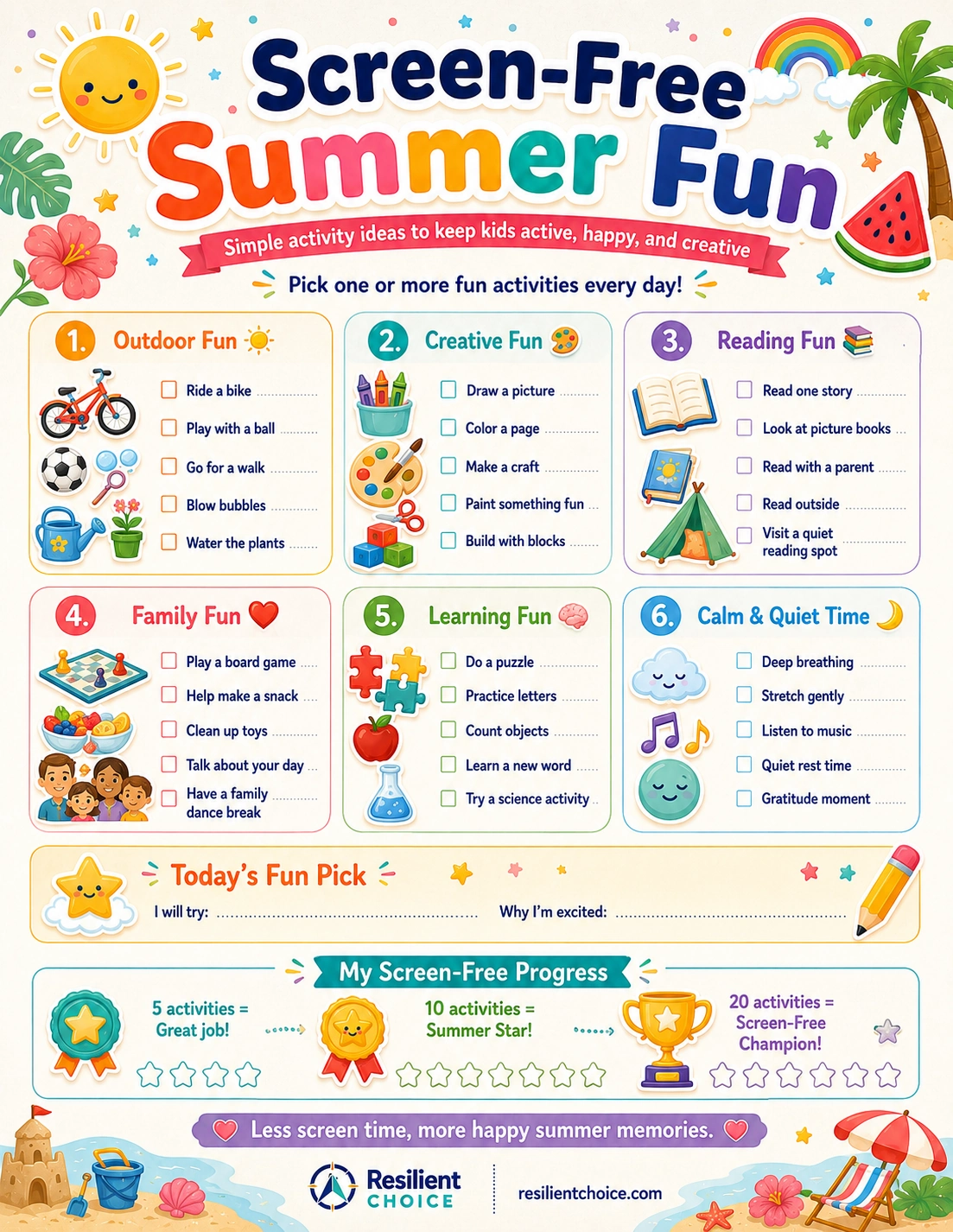
- Screen-Free Summer Fun: activity checklist for creative, active, quiet, and family fun.
Pages that encourage progress
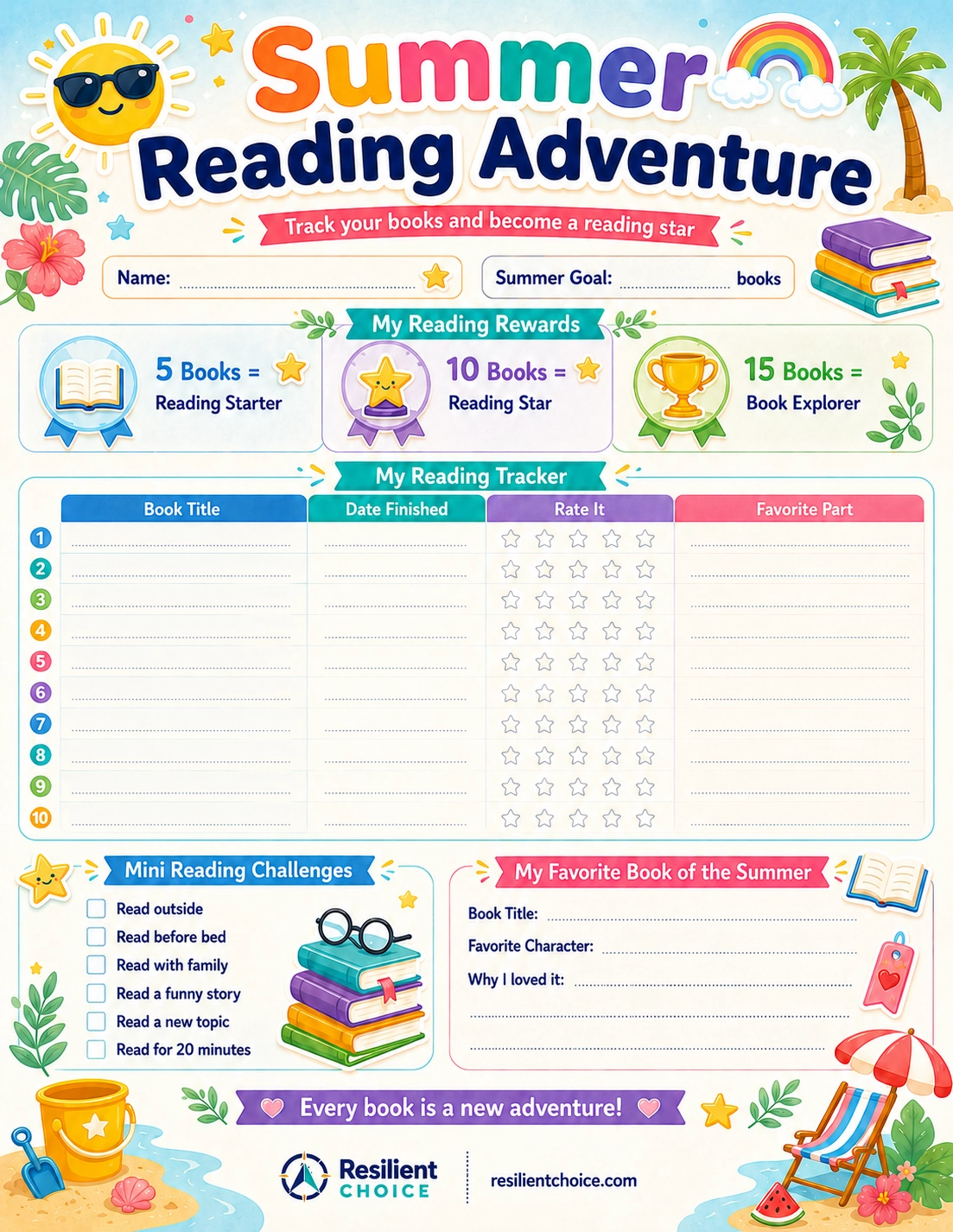
- Summer Reading Adventure: summer reading tracker to make books feel like a challenge.
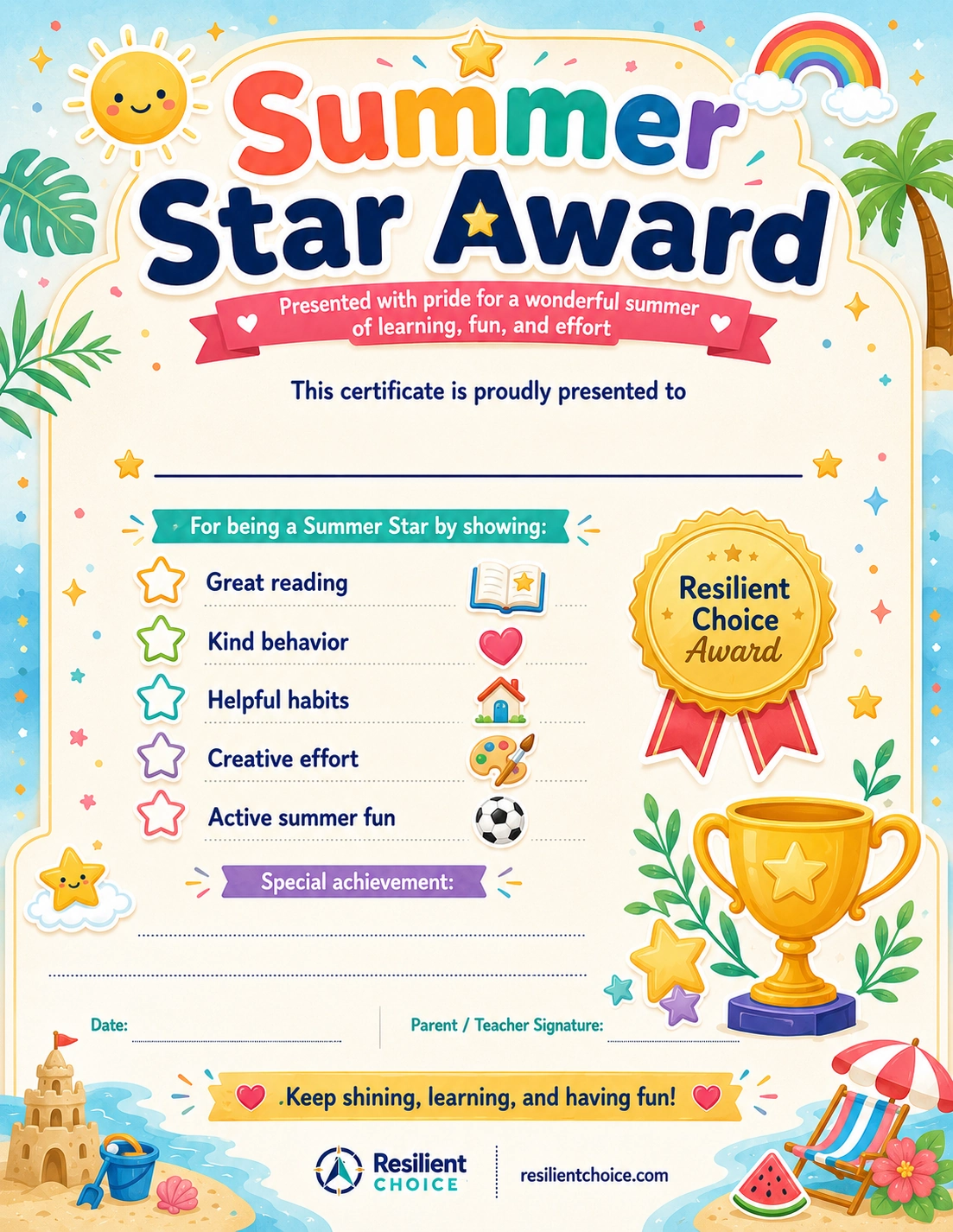
- Summer Star Award: reward certificate for reading, helpful habits, kindness, and effort.
- Simple printable format: easy to print, use, and repeat when your week needs a reset.
Tips to make the summer routine actually work
Start with two or three anchors
Do not try to control the whole day at first. Start with morning routine, reading time, and wind down. Once those feel normal, add screen-free activities or weekly planning.
Let kids help choose activities
Children are more likely to follow a plan they helped create. Let them choose one reading goal, one outdoor activity, and one screen-free activity for the day.
Repeat the same flow most days
Repetition is not boring for kids in the same way it can feel boring for adults. A repeated rhythm helps children know what comes next without needing constant reminders.
Do not aim for a perfect summer
Some days will be messy. Some days the checklist will not get finished. That is normal. The plan is there to support your family, not to make you feel behind.
If your child is having a rough day, return to the simplest version of the summer plan for kids at home: get ready, read a little, move the body, choose one screen-free activity, and wind down gently.
Get the free Summer Schedule Pack
Click below to open the secure signup page and get the 5-page printable PDF with a daily schedule, weekly planner, reading tracker, screen-free checklist, and reward certificate.
Get the Free Summer Schedule Pack by Email
Open the secure signup page, enter your email, and receive the free 5-page printable PDF. No payment needed.
Get My Free Printable PackWant to customize this summer plan for your child?
The free PDF is perfect when you want to print and start quickly. But if you want to edit the child’s name, routine blocks, reading goals, activities, reward certificate, or daily sections, the editable version gives you more control.
- Edit the daily routine, weekly planner, reading tracker, activity checklist, and certificate text.
- Personalize the summer plan for different ages, siblings, homeschool days, travel days, or quieter home days.
- Includes editable PPTX template, printable PDF version, and simple editing instructions.
- Works with Canva upload, PowerPoint, and Google Slides.
Customize the routine
Change morning tasks, reading time, chores, outdoor play, quiet time, and evening steps to match your home.
Edit reading goals
Personalize the reading tracker with your child’s book goal, reward idea, and favorite book notes.
Personalize rewards
Edit the certificate with your child’s name, achievement, date, and signature for a more meaningful finish.
Choose the next routine tool by the moment that keeps repeating.
Keep the free summer plan. Add only the focused support your family needs next—morning, after school, screen time, bedtime or the complete school-day system.
Free Summer Schedule for Kids
A five-page daily schedule, weekly planner, reading tracker, screen-free checklist and reward certificate.
Editable Summer Schedule Template for Kids
Customize names, routine blocks, activities, reading goals, weekly plans and the reward certificate.
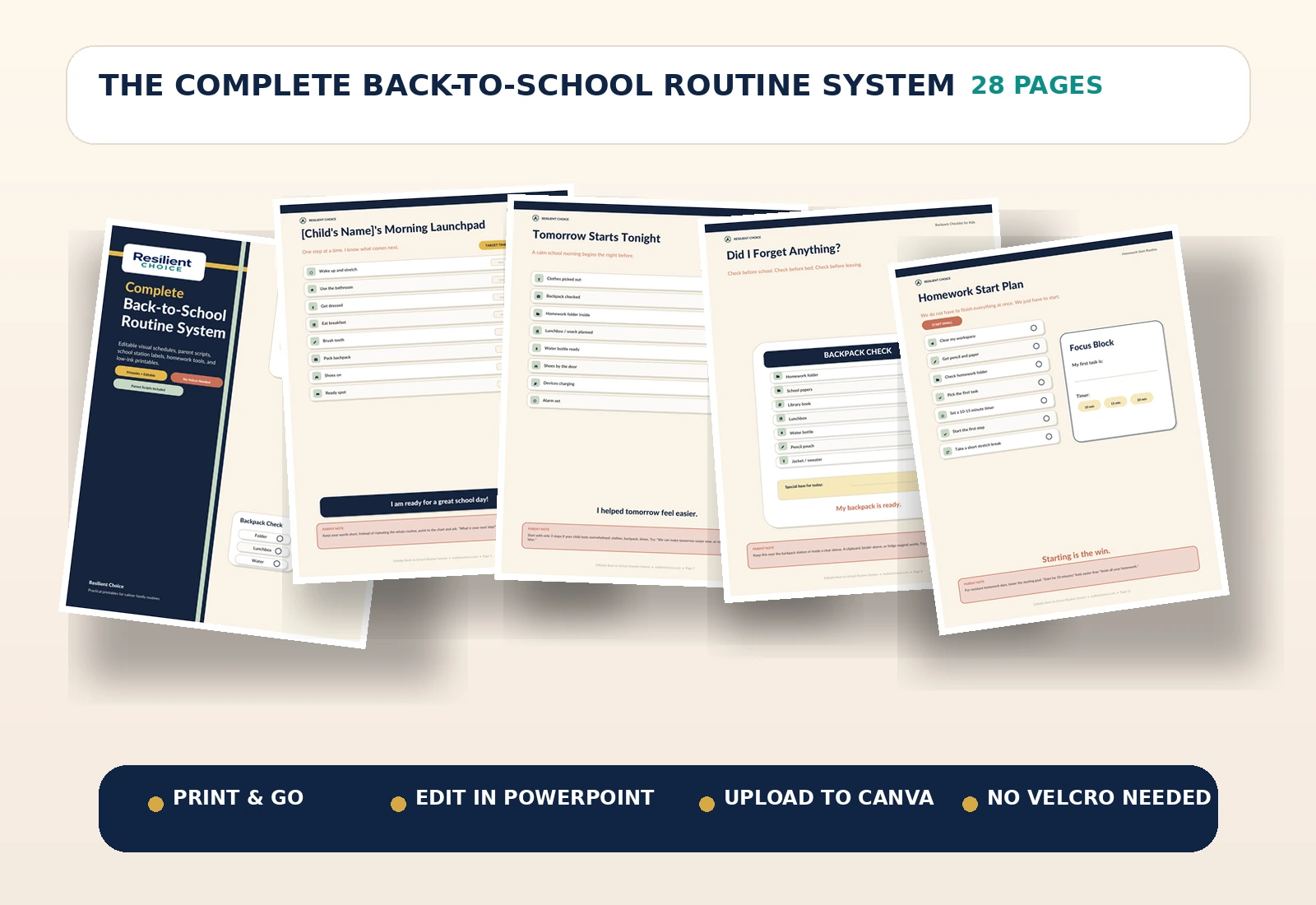
Complete Back-to-School Routine System
A coordinated 28-page system for school mornings, backpacks, homework starts, screen-time transitions, weekly planning and school-night preparation.
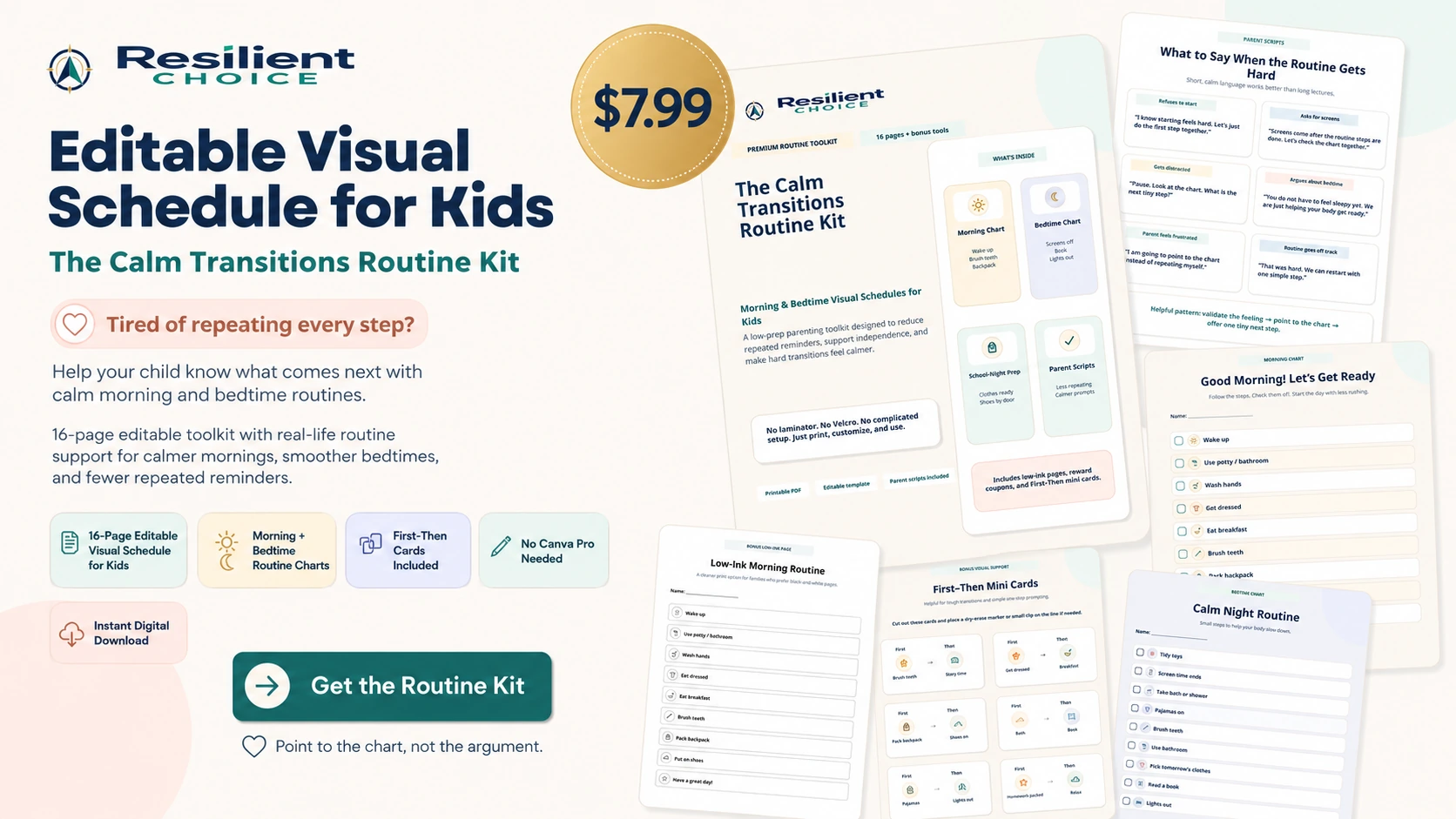
Editable Morning & Bedtime Visual Schedules for Kids
A focused 16-page kit with morning and bedtime charts, First-Then cards, parent scripts and low-ink versions.
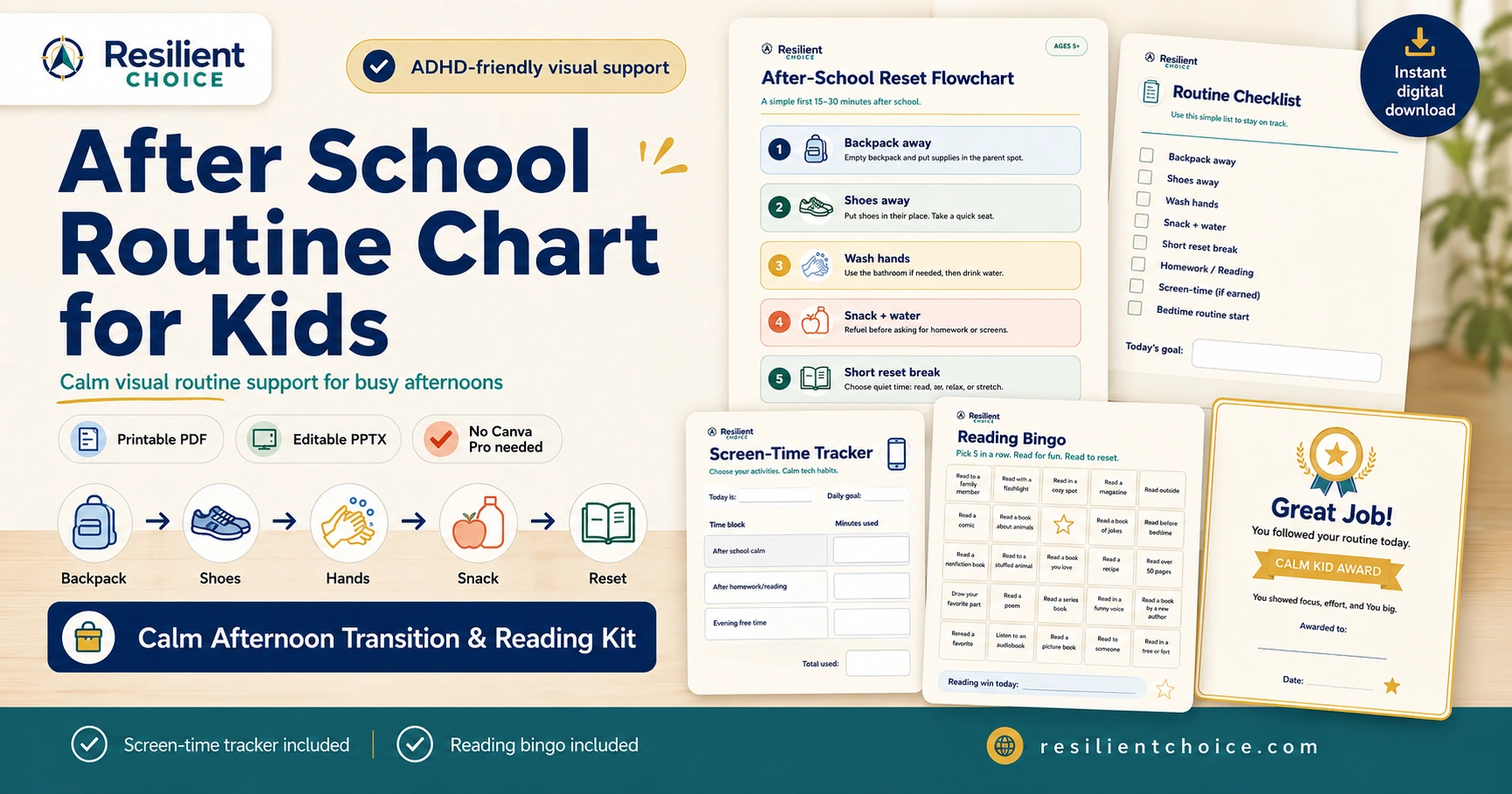
After School Routine Chart for Kids
A focused afternoon reset for snack, homework, reading, chores and screen-time structure.
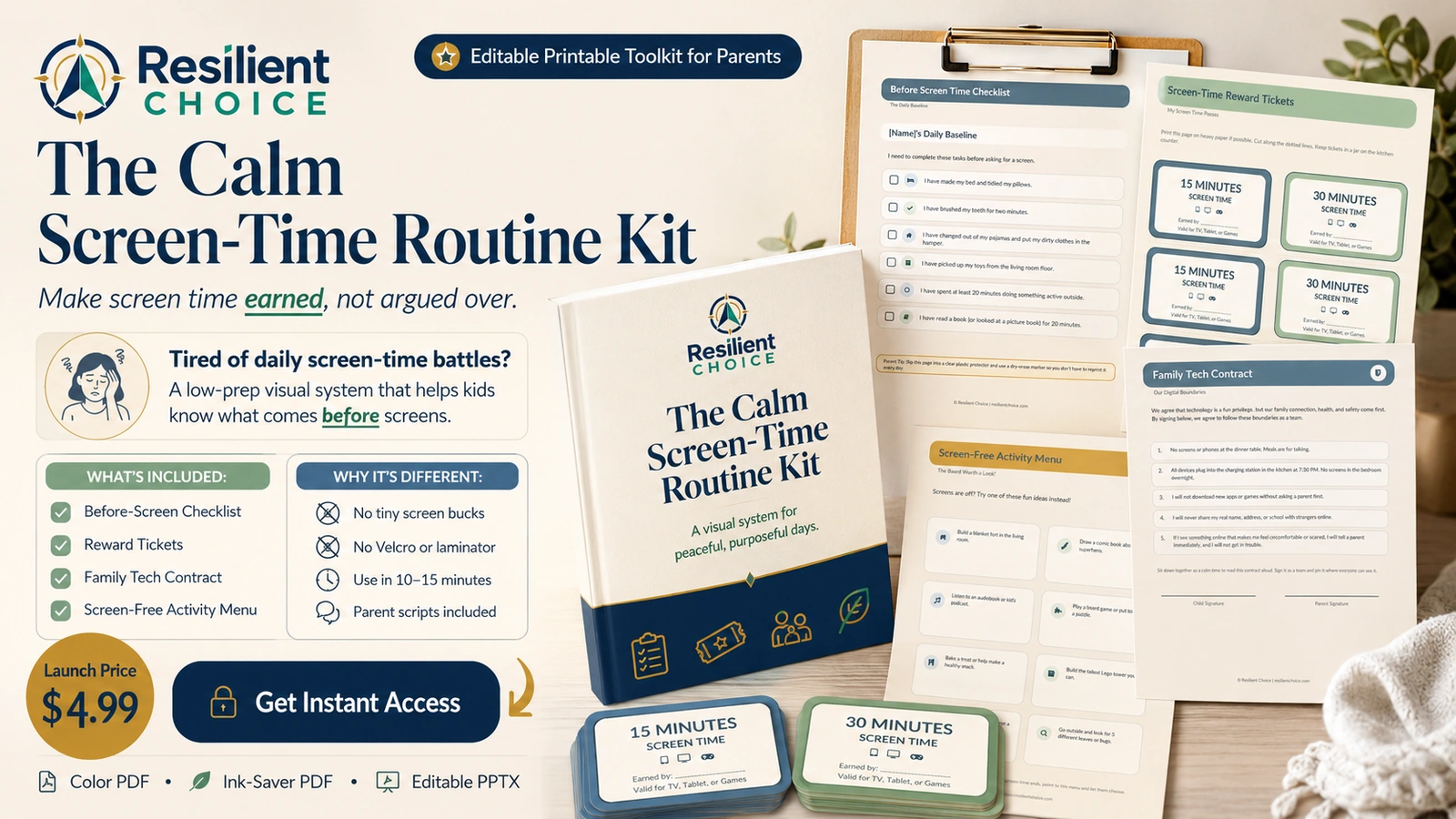
Screen Time Rules Checklist for Kids
A before-screen checklist, reward tickets, family tech contract, screen-free choices and parent guidance.
Want the direct printable page?
This article explains the simple summer plan for kids at home. If you want to go straight to the free printable landing page, visit the Free Summer Schedule for Kids Printable Pack.
Quick questions
What is a good summer plan for kids at home?
A good summer plan for kids at home uses a simple rhythm: morning routine, reading time, outdoor play, screen-free fun, and wind down. It should give kids structure without making the day feel too strict.
How do I make a summer schedule for kids?
Start with a few daily anchors instead of planning every minute. Choose wake-up basics, reading time, outdoor play, quiet time, meals, and bedtime. A visual printable schedule can help kids follow the routine more independently.
How can I reduce screen time during summer?
Prepare a short list of screen-free activities before the day starts. Keep books, puzzles, outdoor toys, art supplies, and simple helping tasks visible. It also helps to schedule screen-free time before children ask for tablets or TV.
What are good screen-free summer activities for kids?
Good screen-free activities include reading outside, drawing, puzzles, sidewalk chalk, bike rides, water play, pretend play, nature walks, board games, blanket forts, and helping with simple baking or household tasks.
Is the summer schedule printable free?
Yes. The free Summer Schedule for Kids Starter Pack includes five printable pages: daily schedule, weekly planner, reading tracker, screen-free activity checklist, and reward certificate.
Can I customize this summer plan for my child?
Yes. The free PDF is made for quick printing, and the optional editable version lets you customize the routine, activities, reading goals, child name, and reward certificate in Canva, PowerPoint, or Google Slides.